The short answer
Soy wax is a plant-based wax made from soybean oil. But no candle is soot-free once it's lit. The National Candle Association says plainly, "There is no such thing as a soot-free wax," and that sooting is mostly down to wick length and a disturbed flame, not the type of wax. That's why we don't call our candles "non-toxic" or "clean burning": nothing defines those words, and every flame makes some soot.
What soy wax is
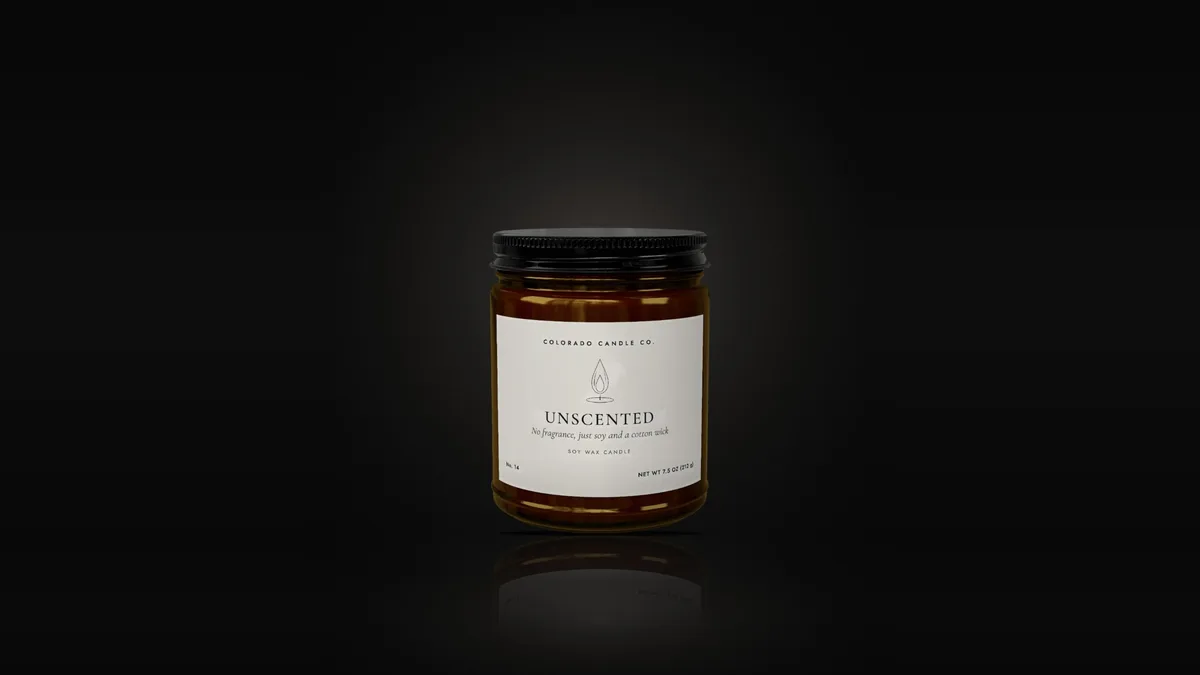
Soy wax is made by hydrogenating soybean oil, which turns the liquid oil into a soft, solid wax. Ours is natural soy wax from US-grown soybeans, with a cotton and paper wick. Scented candles also contain fragrance oil; our Unscented candle doesn't.
Does soy burn cleaner than paraffin?
Not according to the National Candle Association, which represents makers of every kind of wax. It says all candle waxes "have been shown to burn cleanly, safely and in the same manner," and that no wax is "best." The bigger differences come from how a candle is made and burned. Our soy vs. paraffin guide compares the two in more detail.
What a 2021 study measured
Researchers at Germany's Fraunhofer WKI burned 24 test candles in a sealed chamber: four waxes with five fragrances, plus unscented candles, and measured gases and particles including carbon monoxide, formaldehyde, benzene and fine particles. In most cases the calculated indoor concentrations were well below health guidance values; the authors discuss the exceptions (nitrogen dioxide, acrolein and benzo[a]pyrene). Scented and unscented candles gave off significantly different mixtures. The study was designed with candle makers and fragrance houses, so read it with that in mind.
How to burn any candle with less soot
- Trim the wick to ¼ inch before every burn.
- Keep the candle out of drafts, fans and vents, which make the flame flicker and smoke.
- Burn for no more than four hours at a time, and air out a small room.
- Stop when about ½ inch of wax is left.
If you're sensitive to scent
If fragrance bothers you, or someone at home has asthma or another breathing problem, choose an unscented candle or a flameless one, and ask your doctor what's right for you. Our Unscented candle has no added fragrance, from $12.
This is general information, not medical advice. Sources: National Candle Association, elements of a candle: wax; Salthammer et al., Measurement and evaluation of gaseous and particulate emissions from burning scented and unscented candles, Environment International 155 (2021) 106590.
More guides
- Soy vs. Paraffin Candles: What's the Difference?
- How Long Does a Candle Last? Burn Times by Size
- How to Choose a Candle Scent (for Every Room and Season)
- Candle Gifts Under $25: Good Picks for Everyone on Your List
- The Best Fall Candle Scents, and What They Actually Smell Like
- Christmas Candle Gift Guide: A Scent for Everyone on Your List
- Housewarming Candle Gifts: Which Scent and Size to Bring
- Why Is My Candle Tunneling? How to Fix It
- How to Make a Candle Smell Stronger (Scent Throw)
- Why Is My Candle Smoking? Soot and Mushrooming Wicks
- Soy Candle Frosting and Wet Spots: Why They're Normal
- How to Get Wax Out of a Candle Jar and Reuse It
- Best Winter Candle Scents, from Balsam to Vanilla
- Candle Gifts for Coworkers and Clients
- Thanksgiving Candles: What to Light, and What to Bring the Host
- Candle Gifts for Men: Woodsy, Fresh and Spiced Scents
- Candle Gifts for Mom: Floral, Cozy and Fresh Scents
- Are Candles Safe for Cats and Dogs? What Vet Sources Say
- Do Candles Expire? How Long a Candle Keeps Its Scent
- How to Get Candle Wax Out of Clothes, Carpet and Wood
- How to Trim a Candle Wick, With or Without a Trimmer
- How to Make Your House Smell Good, Room by Room