Are candle warmers safe?
Generally they're lower-risk than a lit candle. An FDNY battalion commander told NBC Select that an open flame is always a potential hazard because a pet or someone moving in their sleep can knock it over; a warmer has no flame to knock over. The National Candle Association adds a caution: having no open flame doesn't make a product fire-resistant. Warmers and the candles on them get hot, and a faulty warmer can start a fire.
That last part has happened. In 2008 the U.S. Consumer Product Safety Commission announced a recall of about 730,000 electric candle warmers because the heating element could come loose and melt the plastic base, which could scorch or ignite the surface under it.
How to use a candle warmer safely
- Don't leave it running when you go out or go to sleep. A timer or automatic shut-off is a good backup, not a reason to leave it on.
- Set it on a stable surface, away from curtains, bedding, upholstery and the edge of a table, where children and pets can't knock it. More on candles around pets.
- Never light the candle while it's on the warmer. The National Candle Association warns the wax could get hot enough to catch fire.
- Use only the bulb the warmer's maker specifies, at the stated wattage.
- Let it cool before you touch it. The lamp, the plate and the jar all get hot.
- Only warm a candle in a glass or ceramic container. Pillar candles and loose wax melts don't belong under a lamp; melts go in a warmer made for them.
- Buy a warmer with a safety mark from a testing lab, such as UL or ETL, and check CPSC recalls for your model.
Candle warmer vs. burning a candle
- No flame, no soot. Nothing is burning, so there's no flickering wick or black smoke. That's also why warmers are popular where open flames aren't allowed, like many dorms. Check the rules where you live.
- The wax lasts longer. A wick burns wax away; a warmer only melts it, so the jar stays full while the fragrance slowly fades. When the wax barely smells anymore, the candle is done.
- The scent can be softer. Depending on the candle's size and how far it sits from the lamp, a warmer may not give as strong or even a scent as a lit candle.
- Lamps and plates work differently. A warmer lamp shines a hot bulb, usually halogen, down on the candle and melts it from the top. A warmer plate heats the jar from the bottom.
Can you light a candle after using a warmer?
Yes, just not at the same time. Turn the warmer off and let the wax harden, then trim the wick to ¼ inch and light it as usual.
Using our candles with a warmer
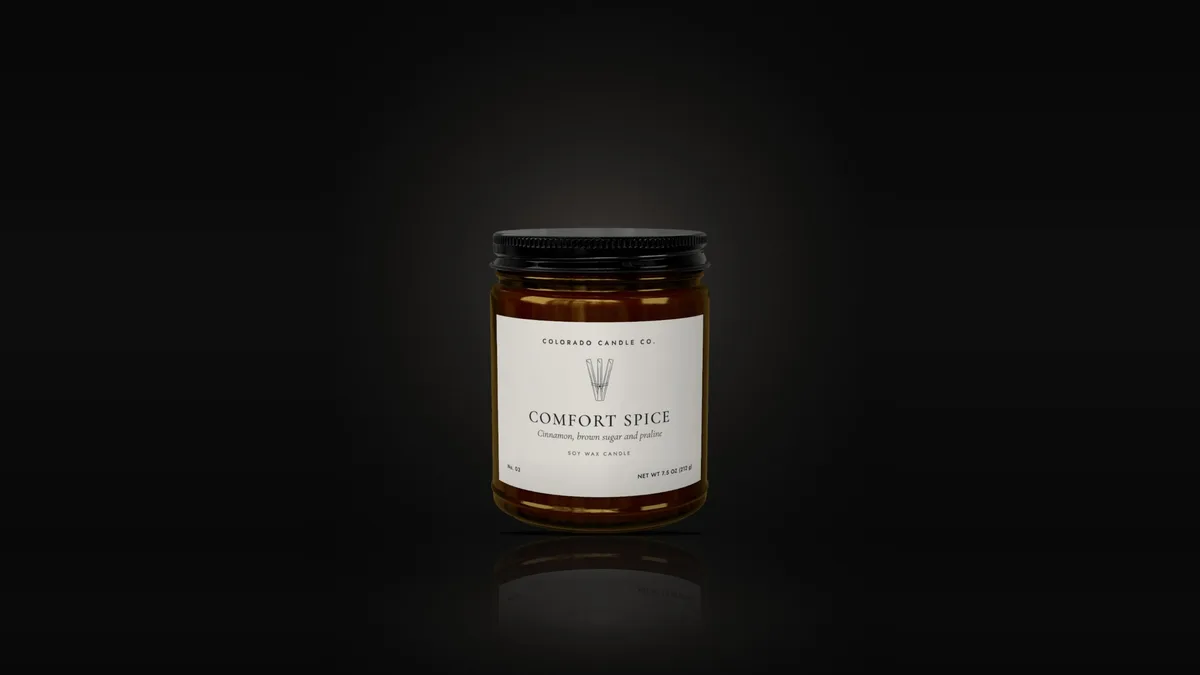
All of our candles come in glass: the 4 oz amber jar and 9 oz amber jar (take the black lid off first), the 11 oz glass tumbler and the 16 oz glass jar. If you're using a lamp, make sure it raises high enough to clear the jar; the 16 oz jar is the tallest. Vanilla is the most-searched candle scent in the US, so Vanilla Bean is an easy place to start, or see how to choose a scent.
Sources: NBC Select, candle warmers that deliver on scent without using a flame (Oct 2026); NBC Select, how to make your candles last longer, with National Candle Association guidance (Dec 2023); CPSC, electric candle warmers recalled due to fire hazard; National Candle Association, fire safety.
More guides
- Soy vs. Paraffin Candles: What's the Difference?
- How Long Does a Candle Last? Burn Times by Size
- How to Choose a Candle Scent (for Every Room and Season)
- Candle Gifts Under $25: Good Picks for Everyone on Your List
- The Best Fall Candle Scents, and What They Actually Smell Like
- Christmas Candle Gift Guide: A Scent for Everyone on Your List
- Housewarming Candle Gifts: Which Scent and Size to Bring
- Why Is My Candle Tunneling? How to Fix It
- How to Make a Candle Smell Stronger (Scent Throw)
- Why Is My Candle Smoking or Flickering? Soot and Mushrooming Wicks
- Soy Candle Frosting and Wet Spots: Why They're Normal
- How to Get Wax Out of a Candle Jar and Reuse It
- Best Winter Candle Scents, from Balsam to Vanilla
- Candle Gifts for Coworkers and Clients
- Thanksgiving Candles: What to Light, and What to Bring the Host
- Candle Gifts for Men: Woodsy, Fresh and Spiced Scents
- Candle Gifts for Mom: Floral, Cozy and Fresh Scents
- Are Candles Safe for Cats and Dogs? What Vet Sources Say
- Do Candles Expire? How Long a Candle Keeps Its Scent
- How to Get Candle Wax Out of Clothes, Carpet and Wood
- How to Trim a Candle Wick, With or Without a Trimmer
- Are Soy Candles Toxic? What Soy Wax Is and What Any Flame Gives Off
- How to Make Your House Smell Good, Room by Room
- How to Light a Candle and Put It Out Safely
- Most Popular Candle Scents in the US: 2026 Search Data
- Candle Sizes: Which Jar Candle Size for Each Room